Notes from Ukraine: The Kill Zone

The building lay in ruins, behind a McDonald’s. Its exterior had collapsed, exposing the dusty insides of people’s lives to everyone eating their cheeseburgers nearby.
Two young girls shook against one another beside the swelling collection of flowers dedicated to the two dozen dead. Their cheeks were wet beneath their sunglasses.
I pointed my camera towards a fireman standing on one of the balconies beside the space where the building had stood. He had his hands planted on the balcony, and he looked up at the destruction and then down at the debris.
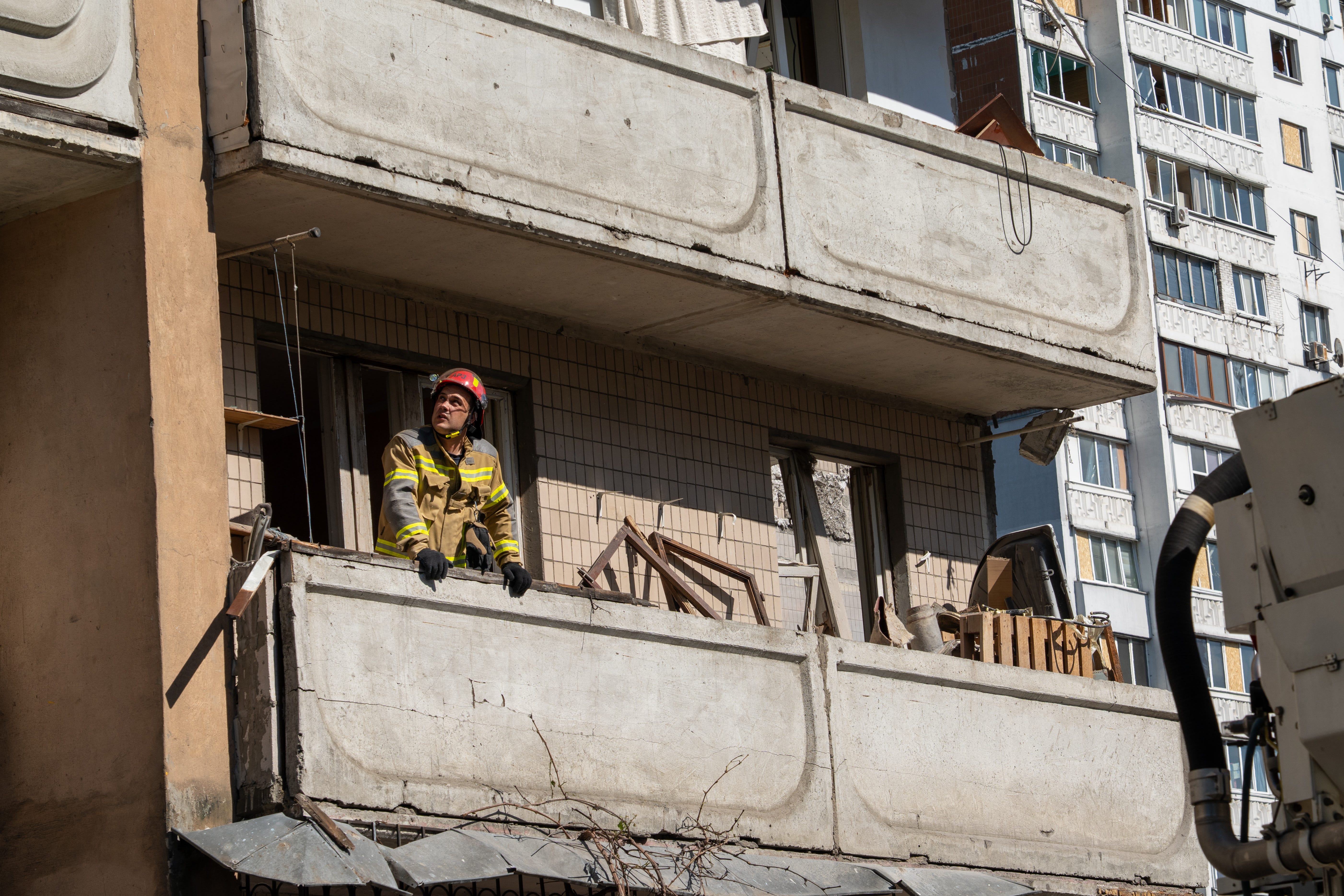
The night of the Russian attack was loud. I was woken up at 3 am by the first signs of the air defences.
Dull thuds. Then came the rattling and spitting of tracer fire. After that, the lawnmower sounds of long-range Shahed drones kept me awake until I got up at 6.30 am.
I had returned to Kyiv just a day before the strike, not from London but from eastern Ukraine.
I went there with a photographer and a driver to follow UAnimals, an animal evacuation unit operating in frontline areas, for a piece for The Sunday Times.
We took the road from Kharkiv in the northeast down to Izium, then east towards the city of Kramatorsk, in the Donetsk region. Most of the road was under netting, intended to stop Russian drones from striking vehicles.
A soldier told me there is a saying near the front: Let the birds show us their wings.
Sitting outside a garage in Izium, early in the morning, I could not stop looking at the nets.
My photographer asked me about the local elections in the UK as we briefly left the cover of the netting. She wanted to know if Starmer would be ousted. She wanted to know about Reform.
I told her they are led by a man called Nigel Farage.
What does he think about Ukraine?
Well, a while ago, he said that he respected Putin as a leader.
And people in Britain voted for him?
Yes.
On the road into Kramatorsk, there were minefields marked just outside the nets. On signs that lined the road were written the words: Not safe.
Spools of barbed wire defences disappeared into the distance, surrounded by mounds of dirt and disused trenches.
We drove past a group of soldiers drinking coffee within the skeleton of a shop. We drove beneath a bridge that had been blown apart by a Russian missile.
By the end of the drive, we started to see military vehicles covered in cages and hedgehog-like spikes, another defence against drones.
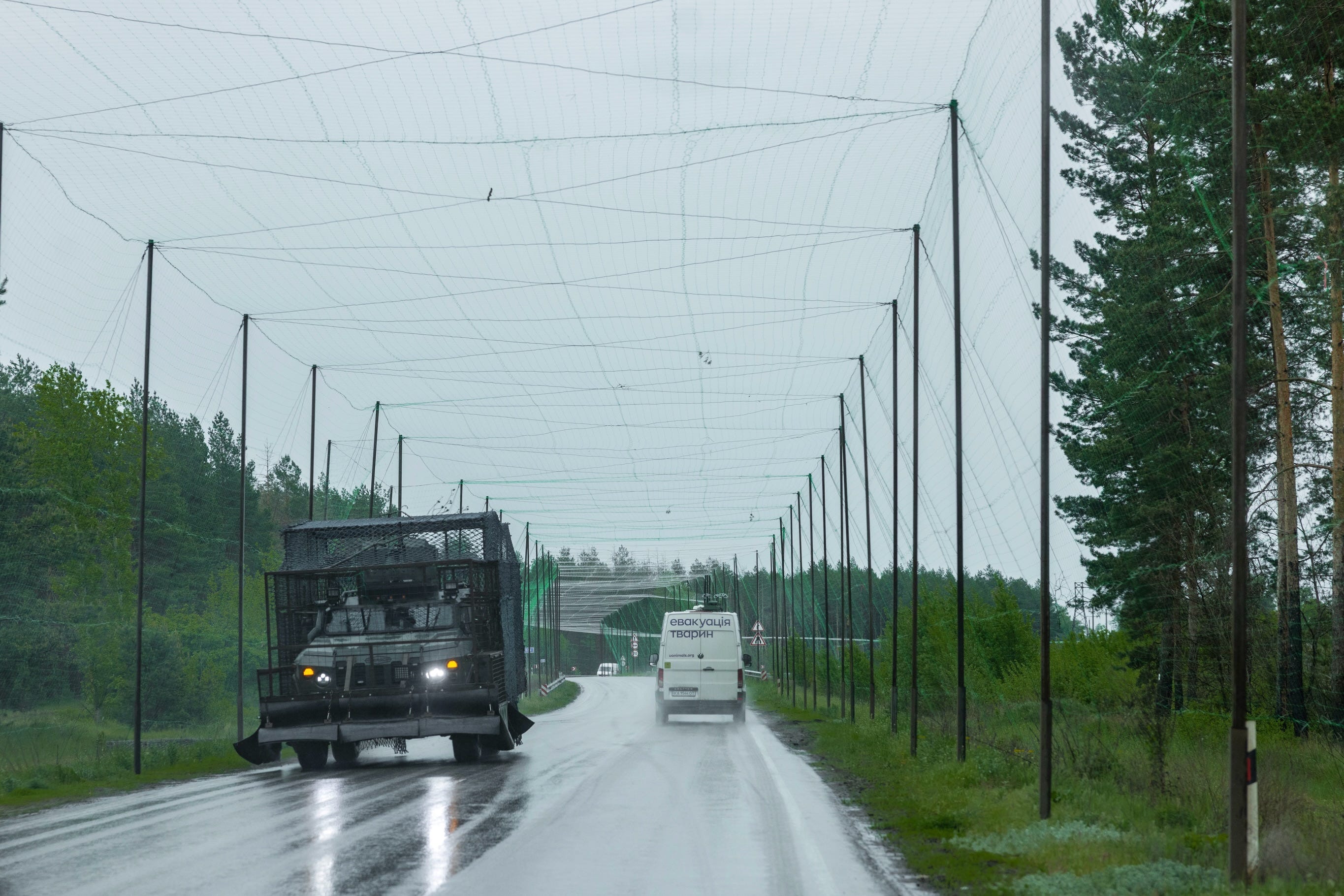
Kramatorsk is not far from the Russian soldiers creeping forward in the eastern region of Donetsk, the one that Putin says he wants at a minimum before halting his invasion. About 80% of the region is occupied.
That the Russians are some 15km away is immaterial. The drone threat is constant.
In a call about journalist safety, a few days before I left for Kramatorsk, I was told that there is no zero line anymore, a reference to the absolute front line. There is only the kill zone.
A few years ago, a journalist could get within a few kilometres of the front without much problem. Now it is dangerous to get within 20km. Sometimes, the kill zone extends up to 50km beyond the frontline.
These first-person-view (FPV) drones hunt anything that moves. Russian pilots in headsets pick their targets from behind the frontline.
Earlier this year, two Ukrainian journalists were killed when one FPV spotted them at a petrol station in Kramatorsk. They had spent too long drinking their coffee.
Before we arrived in the city, we turned on our drone tracker and put on our flak jackets and helmets.
None of it would stop a drone if it decided to come for us. At least the tracker could pick up the signal of nearby drones and warn us, like a countdown, if something was getting progressively closer to us. If the drone was not using a radio signal but a fibre-optic cable, one that connected the drone all the way to the Russian soldiers, however many kilometres away, then the tracker would not pick up anything.
Some journalists have begun talking about the possibility of carrying shotguns with them to the front, or at least travelling with people armed with shotguns, since that is one of the only ways to down a fibre-optic drone.
When I had this conversation with an international lawyer in Kyiv, he told me that he would not be able to prosecute my death if I had been armed. I told him I had no intention of ever carrying a firearm, but his hypothetical inability to hold Russia accountable for my death meant little to me. I would rather not die.
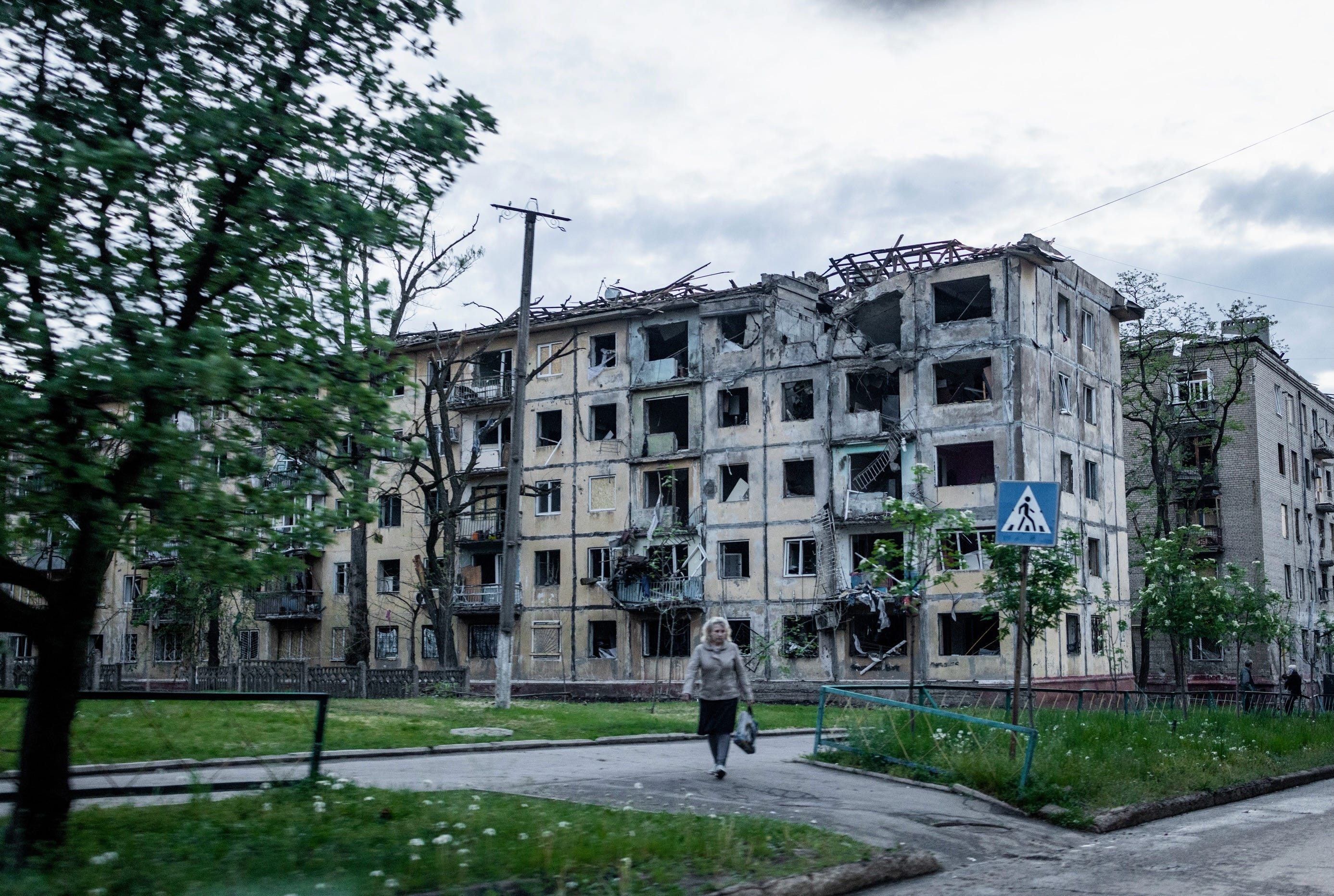
From the top of the hill above Kramatorsk, outside 67-year-old Natasha Filatova’s property, I saw a factory, black and charred. Long exhaust pillars stood above the ruins. It was surrounded by tall trees.
Natasha walked hunched over, with her head wrapped in a cloth.
One of the evacuation unit team, Kseniia, a wiry woman in her early 40s with short blond hair, looked at the drone tracker as it started to beep.
There is a drone overhead, she said.
Is it close?
Nearby.
Then we walked into Natasha’s house to pick up a cat named Sherlock that belonged to her neighbour, who had fled a few months earlier.
Standing under the tin roof guarding the entrance to the house, I wondered whether we were sheltering from the rain or the drone.
I walked into the house because I was unable to ask for an answer. In the cramped corridor, Natasha picked Sherlock out of his cage to say goodbye.
Why don’t you leave? My photographer asked, as they walked towards the van.
Natasha waved her hand dismissively.
I don’t have anywhere to go, she said, looking into the distance. I don’t have any family.
Then she broke down into tears.
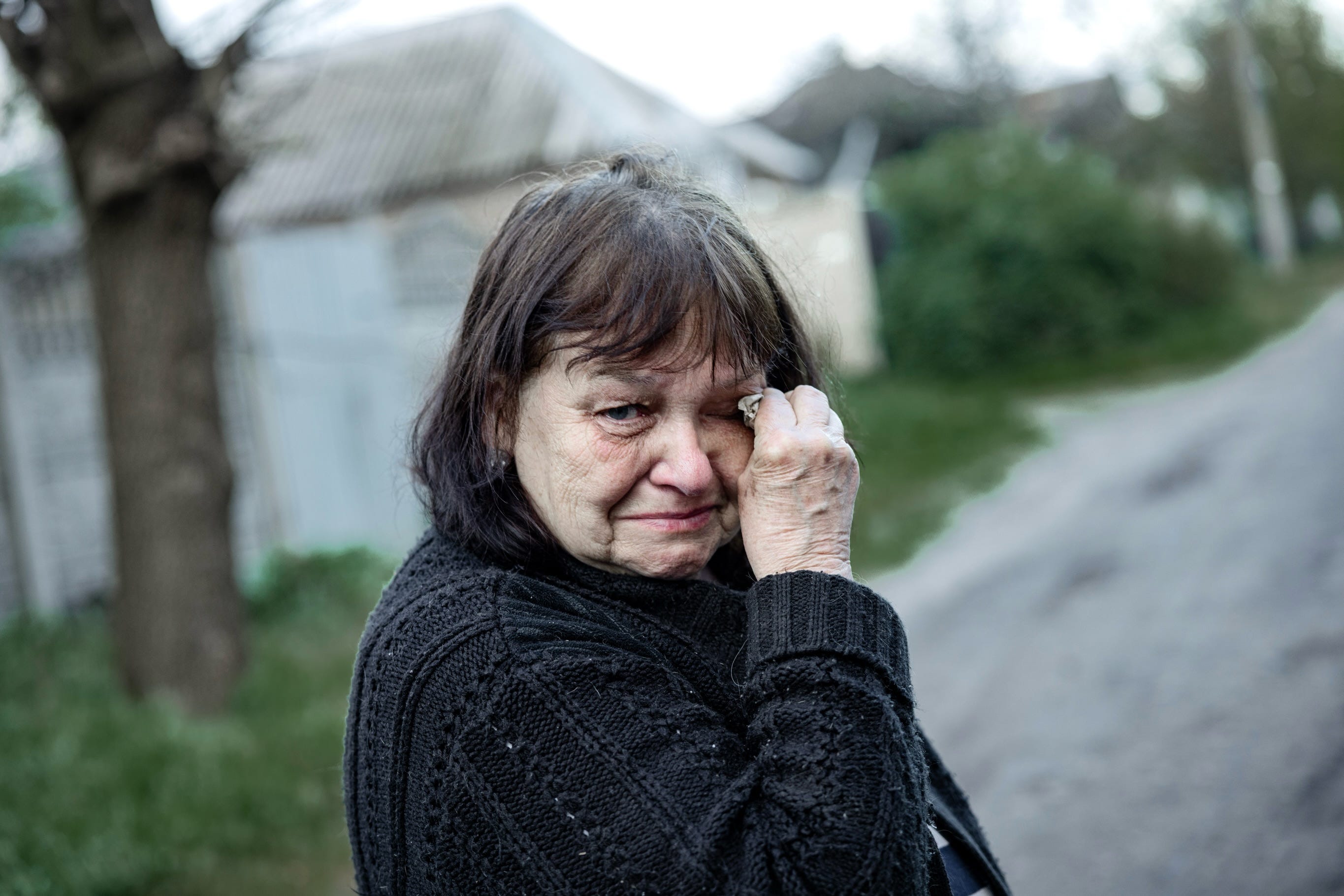
Halfway through the day, we had lunch at a pizza restaurant by the train station. The station was closed last year due to the threat of attacks, so it sat there boarded up and useless. Maybe it will never open again.
I ate a pepperoni pizza with stuffed crusts that reminded me of Domino’s, and I wondered whether it would be safe to go outside and have a cigarette after I had finished. The road was under nets, but the café was not.
Throughout the day, we had debated whether to stay in Kramatorsk or leave. Everyone wanted to leave because the dangers of Donetsk aren’t worth prolonging.
In the evening, we drove past the ruined apartment blocks surrounding Peace Square in the centre of the city. You could see where the strike had torn through the building: wooden structures splaying outwards and broken tiles strewn across the floor.
But each visit to rescue people’s pets took longer than planned. We were visiting 20 properties in one day, yet some of the visits took more than an hour.
Maybe my presence there, doing interviews that mostly wouldn’t make it out of my notebook, delayed it all.
It was past 10 pm when we left the final home. Kseniia and her colleague, 23-year-old Viktor, decided it was best to leave, even if it was late. The drive to the hotel, outside of Donetsk, would take five hours.
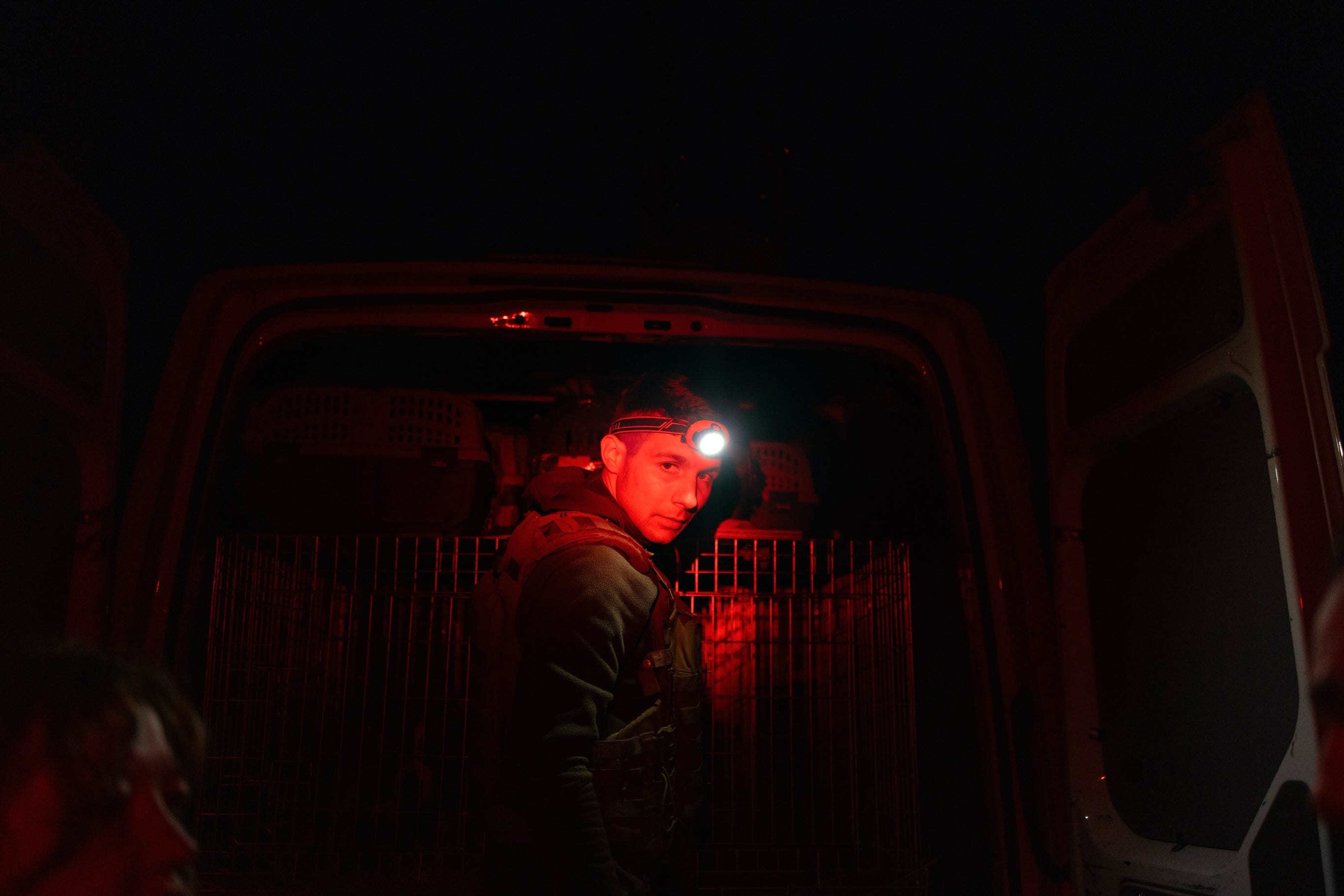
As we were driving out of the city, under the nets, we started talking about how the day had been. My driver asked me how I felt. I did not know what to say, or how to put it into words, so I said, Yes, good, and the conversation died.
A minute later, there was an explosion just above us. An FPV, intercepted in its final descent.
It happened too quickly for me to realise what was going on.
But the car sped away at 80mph, and I felt a peculiar combination of lethargy and adrenaline.
Half a kilometre later, we veered suddenly off the road, outside the drone netting.
One of the poles holding up the nets had collapsed, bringing the netting down with it, and blocking the road.
Soldiers transporting equipment to and from the front got stuck on either side of the netting.
Our car squeezed through a gap, back under the covering. But the UAnimals van, with 40 animals in cages in the back, could not get through, since they had black, metre-high electronic warfare prongs jutting from the roof.
My driver, who fronts his own rock band back in Kyiv, parked the car by the side of the road.
Tom, have you still got one of your rolled cigarettes?
Yes.
Give it to me.
I lit the cigarette and passed it to him. He dragged on it, pulled a knife and got out of the car. Then he walked towards the collapsed netting.
I opened my door and jogged to the base of a large tree. My photographer stood next to me.
I looked up at the nets above me, then towards the gaping hole ahead.
Wearing my leather jacket, the one I thought made me look like a war correspondent, I thought for the first time in my life that I might be about to die.
It took ten minutes for my driver, a few soldiers and Viktor from UAnimals to cut the netting. Some of the men pulled it down while others hacked at its top to cut as much of it away as they could.
Viktor messaged me the next day to say that since they hadn’t had the right tools to cut through the netting, which is reinforced with metal wire, my driver had been the difference between being stuck there for 10 minutes and half an hour.
At 1 am, we stopped at a small roadside kiosk, and I ordered a shawarma wrap.
As I called my girlfriend back in London to tell her I was safe, a tank strapped to the back of a lorry stopped in front of me.
It was covered in cages and hedgehog spikes, too.
We arrived at the hotel outside of Donetsk at 3 am. We had left Kharkiv nearly 24 hours earlier.
At the hotel, we spent fifteen minutes knocking on the door, worrying that after everything, we would have to sleep in our cars.
Eventually, a former soldier with a prosthetic left leg opened the door and let us in.
While I slept, I dreamt of being in Kramatorsk again, chased by an FPV through the streets of the city.
I was with a family who had run a taxi company before being forced to close. I told them I hadn’t meant to be here. It was an accident. They told me the trains weren’t working and that I would have to walk out of the city. It is a dream I have had several times since, in different forms.
I woke up covered in sweat, only a few hours after I had gone to bed, and went for a cigarette.
The dogs in the back of the UAnimals van were howling, and the receptionist had knocked on my door to get me to check if the animals were okay.
I did not have the energy to tell her there was nothing I could do. All I had been doing was making notes.
I drank several coffees and tried to read my book, the same way I do when I am in Kyiv before I start my day, but I kept rereading each page and not understanding it.
Eventually, the others woke up and ordered coffees for themselves.
We would need to make the long drive back to Kyiv that day, to the relative safety of the capital far from the frontline.
I did not know, then, that a day later I would be standing on Kyiv’s left bank, watching a fireman survey the debris of a strike that killed two dozen people, and two girls shake and cry by a makeshift memorial.