Ukraine’s forced child evacuations are about to begin
In villages near the frontline in northeast Ukraine, police officers are trying to persuade families to leave before court orders force them to take children away.

Mariia Barsukova was home alone when an armed police officer knocked on her door in a frontline village in northeastern Ukraine.
Outside, by the village’s only, now destroyed school, the sound of distant artillery disturbed the quiet.
The 12-year-old Mariia moved out of the light of her ground-floor apartment and into the dark corridor.
She looked nervous. Her neighbour – a short, stout woman in a multi-coloured jumper, who had shown Inspector Yulia Goncharenko to Mariia’s door – reassured the girl that everything was fine.
It wasn’t the first time evacuation teams had turned up and tried to persuade the girl to leave her hometown of Khotomlia, just 25 km from the frontline in the Kharkiv region. But it was the first time she had seen the police at her door.
The three of them went outside, followed by the volunteer evacuation unit accompanying Yulia.
She asked the girl why she had not left yet and where her parents were. Mariia said her father had cycled to the shop and would be back soon.
Then she looked to the floor and said, “My mother is dead. She was killed by a drone ten months earlier.” She had been killed not far from their house, not far from Mariia’s destroyed school.
For a moment, Yulia said nothing, and the girl started to cry. Then Yulia stepped forward and pulled the girl into a hug.
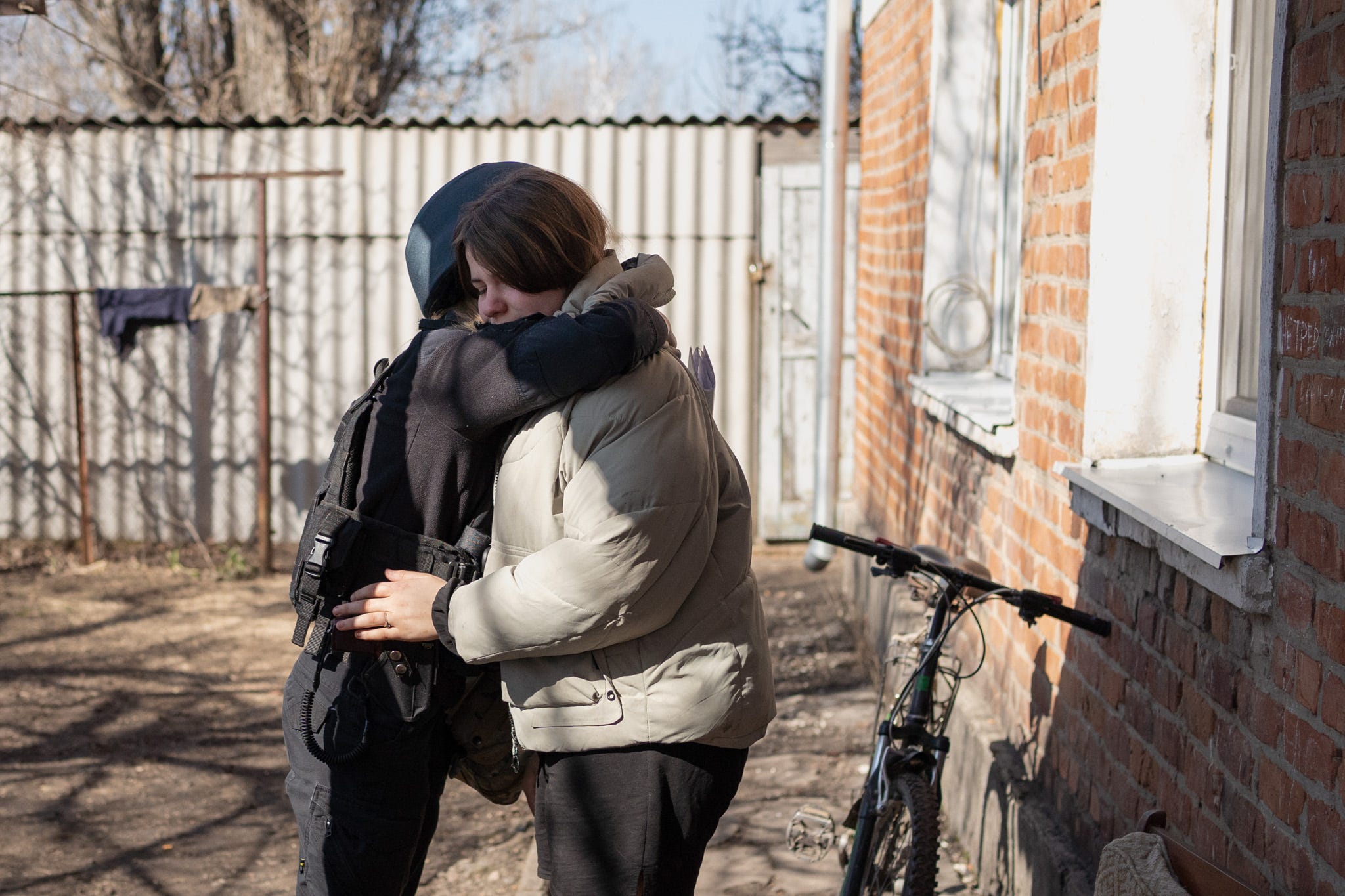
As she wiped tears from the 12-year-old’s cheeks, the inspector changed tactics. “Your mum is in the sky and watching over you,” she whispered. “She wants you to be safe. That is why you have to leave.”
The butt of her pistol glinted in the midday sun as they embraced again.
I was there to watch Yulia and the evacuation unit urge people with children to evacuate. They had been doing this for years, but this time was different.
Under a controversial new law that had just been signed, the police now had the power to forcibly remove children from frontline areas if their parents refused to leave voluntarily.
Officials say the measure is necessary to protect children living inside what soldiers call the “kill zone” — the expanding area behind the frontline within range of Russian drones.
Critics fear it will deepen mistrust in evacuations and fuel Russian propaganda.
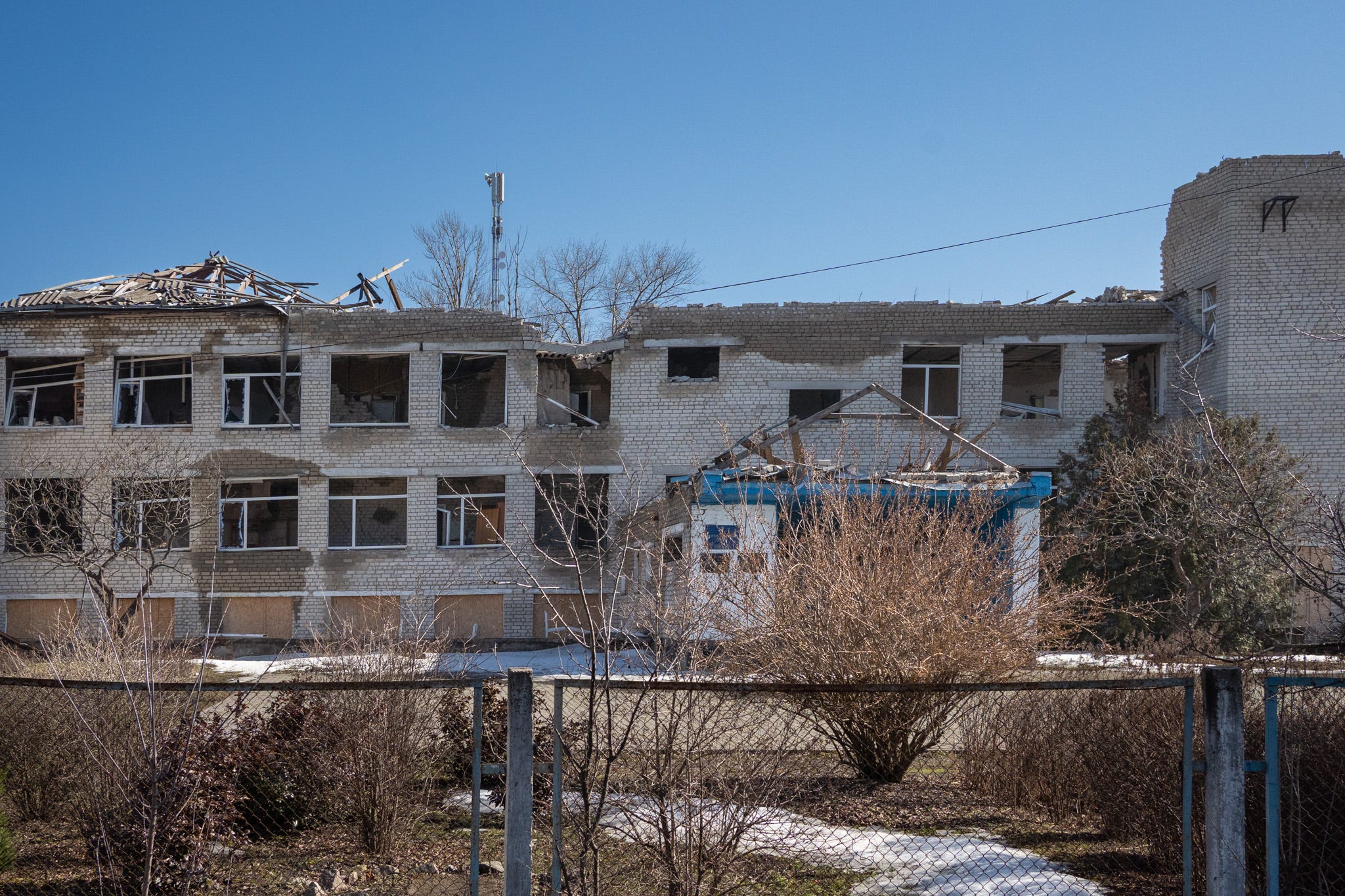
Khotomlia sits just outside the mandatory evacuation zone, but Yulia’s team had come to warn families about the new law while they still had a choice.
Yulia said her team is already seeking a court order to remove a boy from a village near Khotomlia after his mother “blindly refused” to leave.
I had been unsure whether I was going to join the mission. I did not know if the journalistic reward of witnessing these interactions first-hand was worth the risk of visiting such a dangerous area. I had agreed only at 11 pm the night before the 8 am departure.
The team had chosen to use unarmoured vehicles, believing they were out of range of the deadly Russian first-person-view drones. But on the dirt track into the village, Yulia had intercepted the live feed of a drone hunting for vehicles.
I had asked the man sitting next to me in the back of the van, Pavel Nazarkin, an evacuation coordinator in his 30s, what was happening. He had replied only, “Drone.” He was gripping the seat in front of me as we spoke.
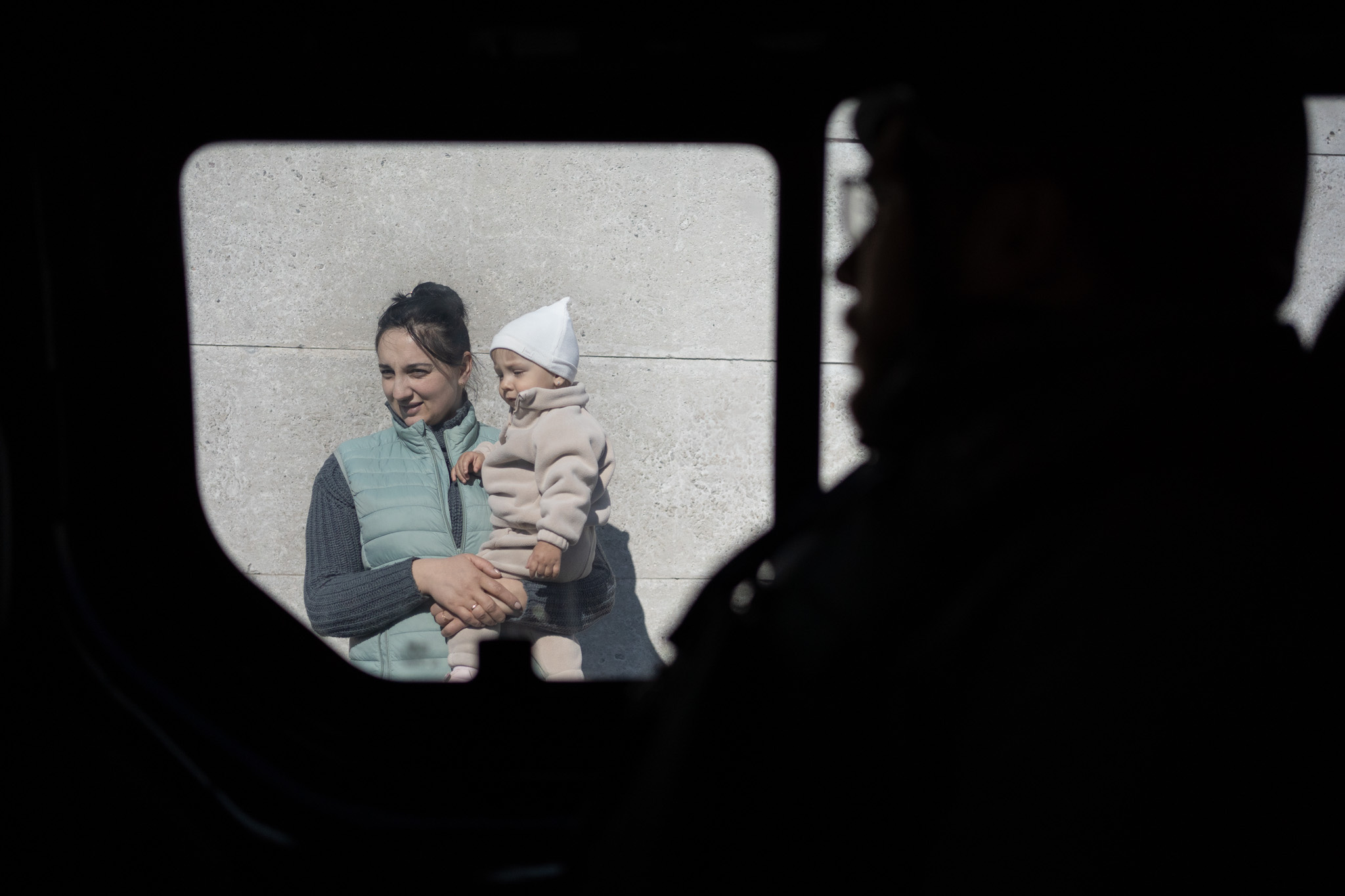
Half an hour earlier, we had been laughing as he told me that they all referred to the Iranian-made Shahed drone used by Russia to bomb Ukrainian cities as a Sluhed.
It loosely translates as “slut drone”. Soon, I realised almost every Russian weapon had acquired some variation of the same nickname.
Later, as we drove over a hastily rebuilt bridge, I asked what had destroyed the original.
“Two ballistic missiles,” he said.
We burst out laughing again.
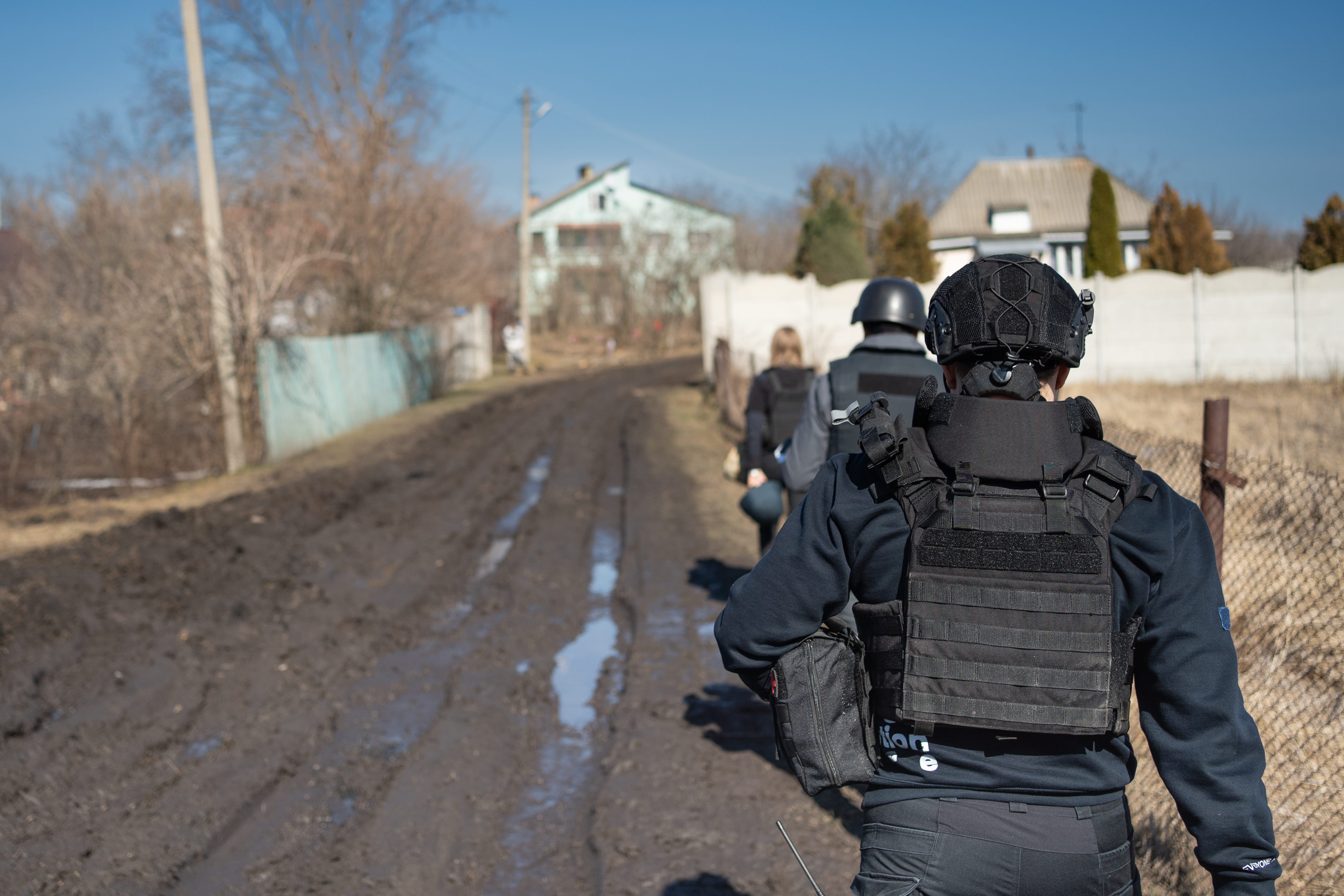
Halfway through the afternoon, after wandering, lost, along boggy roads, we found 36-year-old Olena Vlasinka.
She lived on the edge of the village with her three daughters, between the ages of 14 and 9, her parents, both over 80, and dozens of chickens and goats.
Someone asked Olena why she had not left, and she said she could not leave her mother, who refused to abandon the house. And what would they do with their animals?
They might go, she said, if the internet stopped working and her daughters couldn’t access their online schooling.
As artillery thudded again in the distance, the evacuation team’s medic snapped his fingers, asking: “What will you do if there is a strike?”
Olena stared at him, then looked at her father, who had appeared behind her, and shrugged.
“Well, I don’t know,” she said.
Half the team drifted away.
Olena’s family had lived through the Russian occupation of Khotomlia at the outset of the full-scale invasion.
“We survived then,” she said. “We will survive this.”
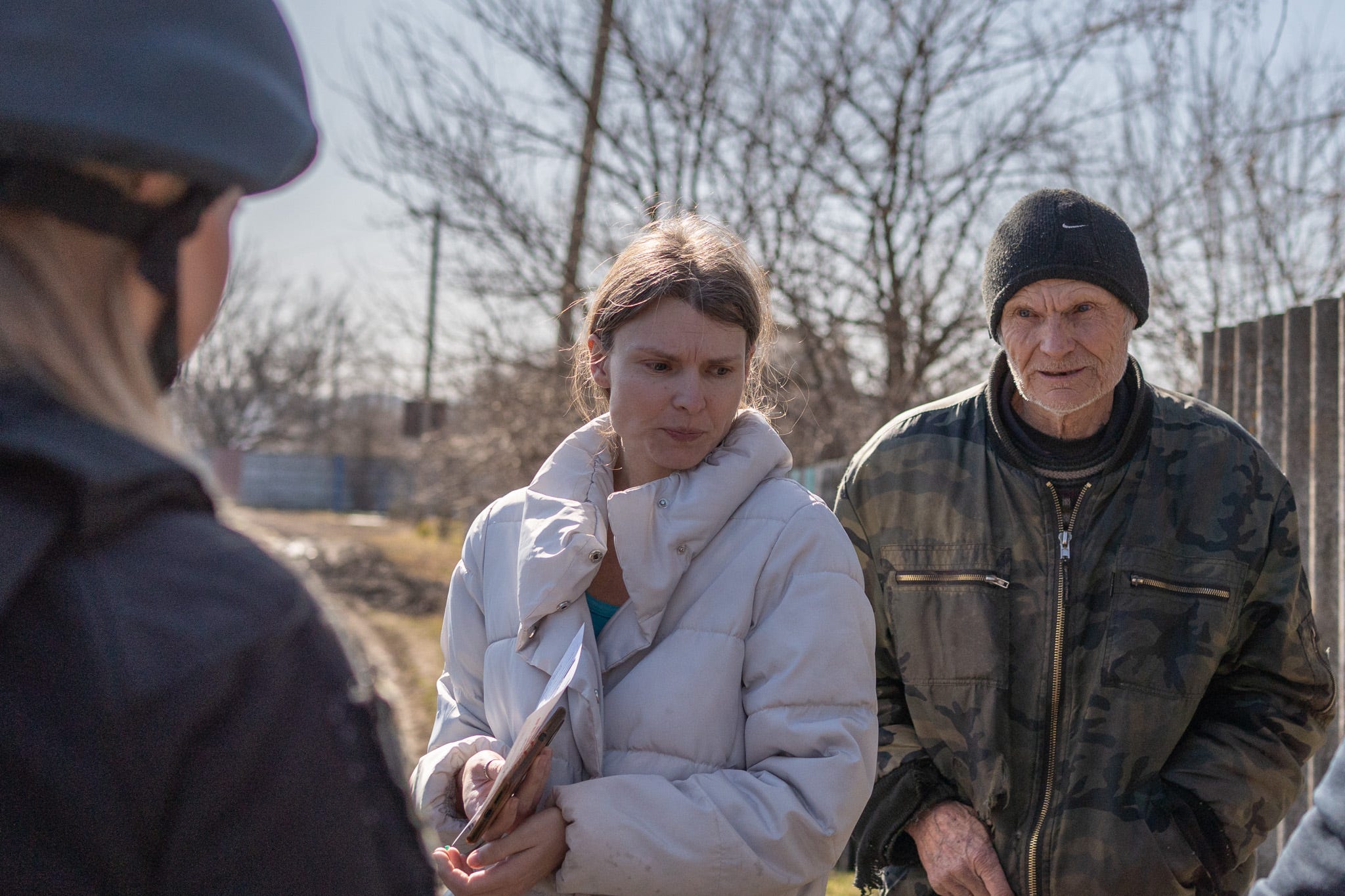
As the two remaining members of the evacuation team left, Olena’s 10-year-old daughter, Lillia, rushed out to see what was happening. Her mother quickly urged her back inside.
Officials say 95 per cent of people leave these frontline villages when ordered to do so. But it is this small number of families who refuse to evacuate that forced the government to introduce the new law.
The endless wandering showed that these people are often hard to find. About half of the families on the Khotomlia list did not answer the door, and Yulia left evacuation leaflets outside.
As I photographed her fixing some leaflets inside one doorway, the medic looked at me and stuck his tongue out. “Take my photo,” he said.
On the door where the leaflets were hung was written the words: “Excuse me, people live here.”
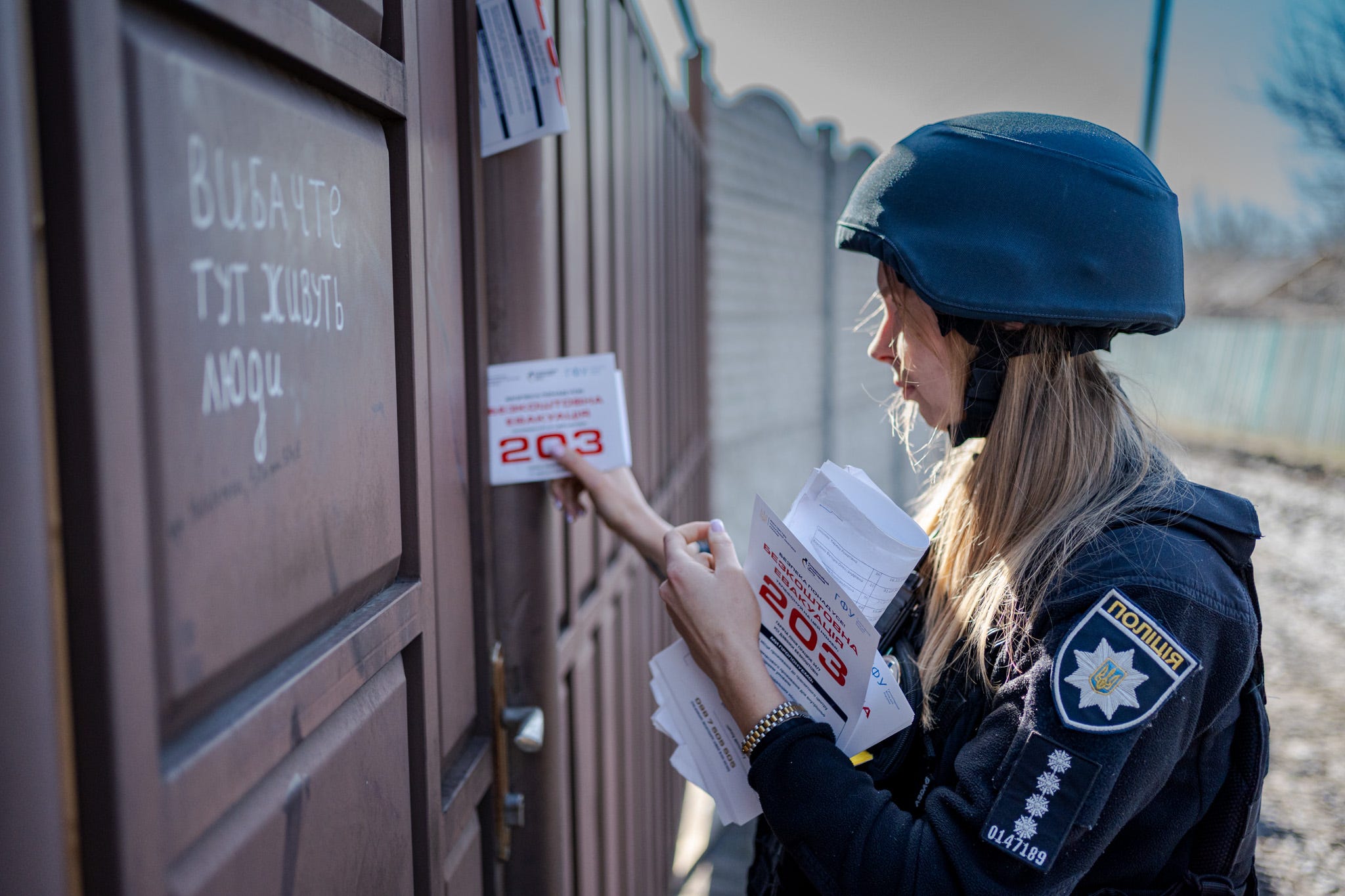
Some families reportedly decline to open their door because they don’t want the authorities to know how many children they have. Others are evading mobilisation, while some, as one official put it, are “idiots” waiting for Russia.
At another house, as two dogs raised their heads over the fence and started barking, a member of the team shouted, “We are not the tetseka”, a reference to Ukraine’s recruitment teams conscripting men into the military. But the door remained closed.
According to the authorities, the law has already helped persuade some parents who previously refused to leave to finally do so, rather than risk being separated from their children. But forced evacuations are still expected.
“In a perfect world, this law wouldn’t exist,” Bohdan Yakhno, the Kharkiv regional director of the Relief Coordination Centre, which organises evacuations across the country, told me from his office in the city.
“I am fully sure that all actors who participate in evacuations do not want to use this law. They will try everything to convince parents to leave with their children. They don’t think: ‘Okay, we need to grab three children, according to this law.’
“But children cannot decide whether to save their lives, and many people risk their lives and die trying to save them.”
When I first read about the law in local eastern Ukrainian newspapers, I thought it sounded shocking. Does the state really have the right to remove children, despite the obvious dangers?
The single biggest concern was what would happen to children after they were removed. Under current plans, they will be taken to transit centres, where parents have 60 days to reclaim them before they may be placed in foster or state care.
Only military police can carry out such evacuations. Once a court order is issued, they must enforce it. But Ukraine’s human rights commissioner’s office told me further regulations are still being drafted, including on the status of children removed without parental consent and the process for returning them to their families.
Bohdan was the first person I called when I read about the law, a month before I went to Khotomlia. I told him it sounded bad. Yes, he said, it might sound bad, but it was necessary. Otherwise, people would die.
A few hours later, I texted him to ask if he could introduce me to the military police who would eventually be responsible for these forced evacuations. I knew I would need to speak to them at length for the story.
“I will ask next week,” he replied. “Today, two people from his team died during an evacuation mission.”
Their names were Yuliia Keleberda and Yevhen Kalhan. Yuliia was just 23 years old. Yevhen was 39. He is survived by his wife, 16-year-old son and seven-year-old daughter.
They were evacuating two men who had previously refused to leave another village in Kharkiv before deciding that life had become too dangerous.
As the four of them drove back to Kharkiv after the extraction, a Russian monitoring drone spotted them. It was linked up to a Lancet, an attack drone that uses AI detection to strike moving targets, which ripped through the rear left side of the vehicle at around 350km/h. It killed Yuliia and Yevhen instantly; the two men were hospitalised, since they had both been sitting on the right-hand side of the car.
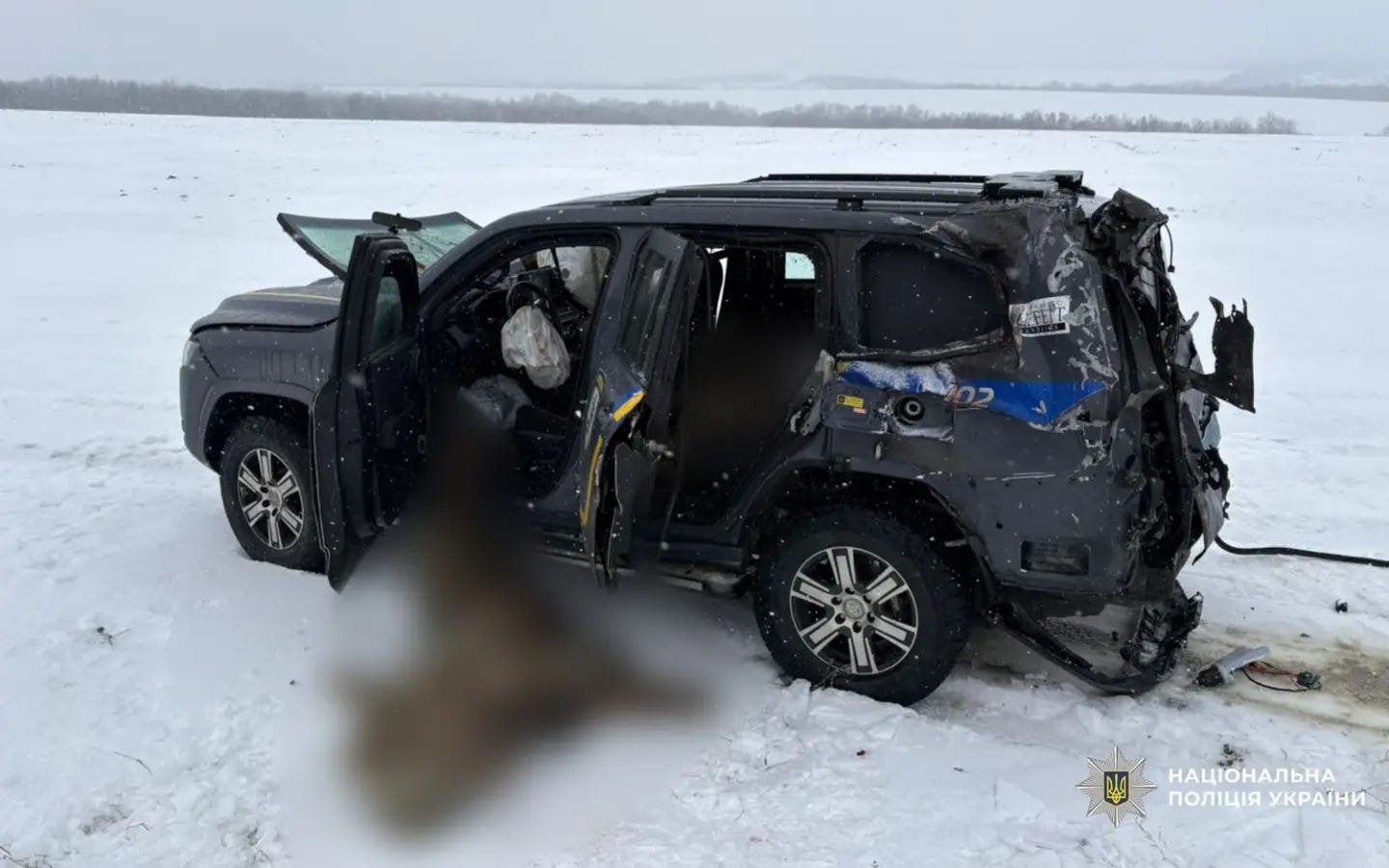
I know this because I did eventually talk to their superior, in a small room within a large, post-Soviet building, in the centre of Kharkiv. The air raid sounded off and on for almost our entire conversation.
His name was Vyacheslav Markov, assistant head of the police department in the Kharkiv region responsible for humanitarian operations. He looked like someone used to being tired.
He said he sympathised with many families who were declining to leave - life is complicated, after all - but that sympathy did not extend to everyone.
“Some of them are idiots,” he said. “And some of them are clearly waiting for the Russians.”
He believed the new law was important, though he was quick to mention that, as a military unit of sorts, they had no option not to conduct these evacuations.
Before the law was passed, he said, military police units had to spend precious time persuading parents to leave and could not remove a child without a legal guardian.
“You had to convince them, promise something, spend time talking,” he said. “But the longer you stay there, the higher the probability of being killed.”
Now, he added, once the order is given, the police can take the child and leave immediately.
He then asked if we could speak about Yuliia and Yevhen, and he spoke for half an hour, telling me what had happened and how the two Russian drones had worked together to destroy the armoured vehicle.
Armour or no armour, it doesn’t matter, a Lancet will rip through it, he said. They were dead the minute they were spotted. You can’t outrun it.
“It’s not a secret … that the enemy is constantly, let’s say, improving their technology,” he added, his face a mixture of anger and fear.
A few days after that conversation, and a day after my trip to Khotomlia, I left for Dnipro, a central-eastern city. It is the third biggest city in Ukraine, behind Kyiv and Kharkiv.
I had been told a few weeks prior that a growing group of NGOs was urging Ukrainian president Volodymyr Zelensky to revoke the new law before it could be used.
So, in Dnipro, I met Alina Subotina, deputy director of Children New Generation, an organisation helping evacuate families from the front line. Their focus is on keeping families together.
Her team had already told me she was “strongly disturbed” when the law was signed.
She had spent the day playing football with children evacuated from the front line at her organisation’s shelter in Dnipro when I met her.
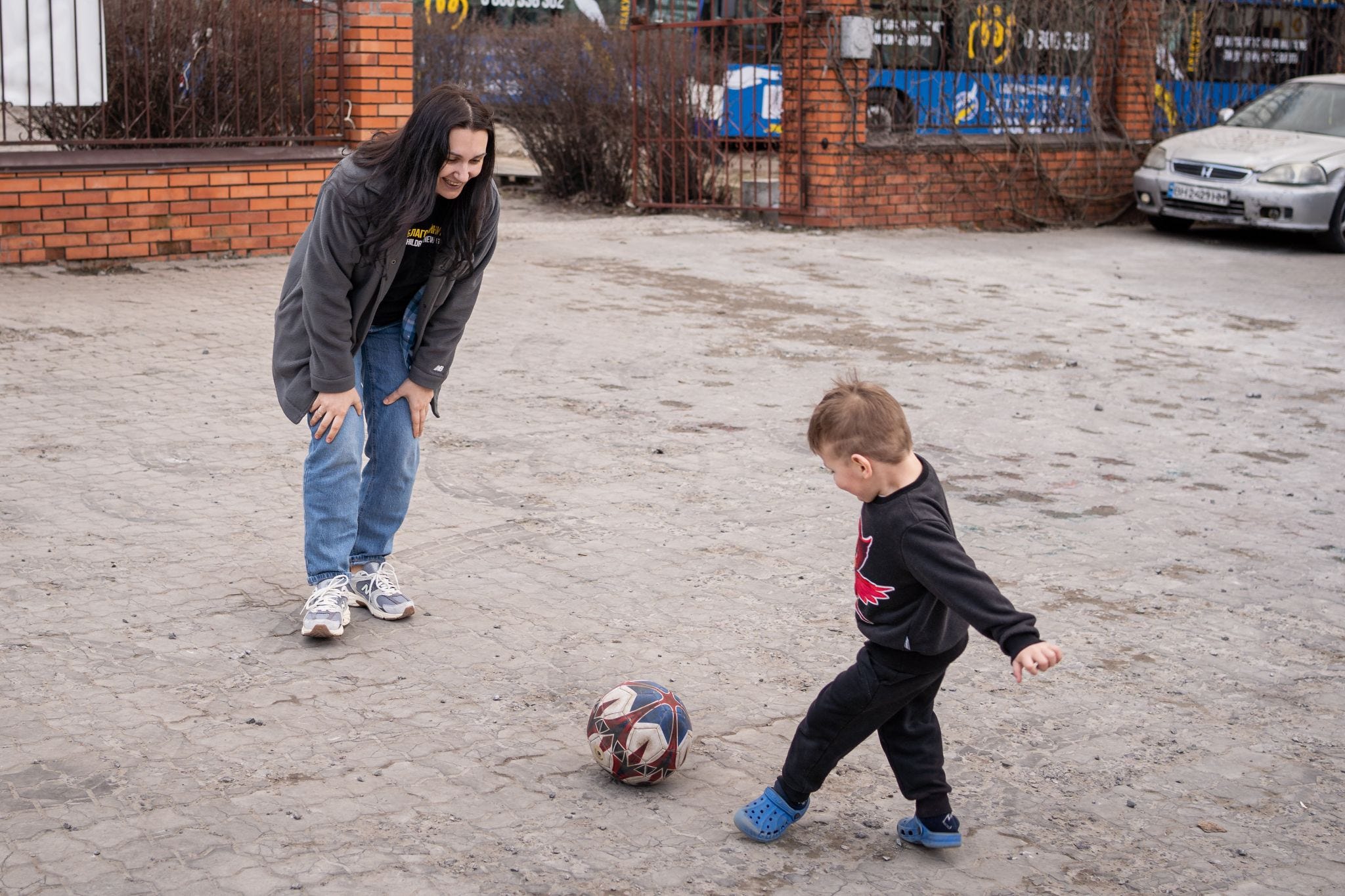
“The evacuation community in Ukraine has spent years building trust with people,” she said. “This poorly communicated law could ruin that trust.”
She said the state had moved too quickly to coercion before solving the reasons families refused to leave: housing, support, information, animals, elderly relatives.
Within a day of parliament approving the law, but before Zelensky signed it, Maria Lvova-Belova, Russia’s commissioner for children’s rights, accused Kyiv of planning to “disappear” children from frontline areas. Lvova-Belova is wanted by the International Criminal Court over the deportation of Ukrainian children into Russia.
The claim was baseless, but Alina’s concern was not that it was true. It was that Ukrainians living near the front, scrolling through Telegram, increasingly cut off from the rest of Ukraine, might just buy the bullshit.
“Russia takes every opportunity to create doubts and ruin the trust of people in evacuations, and in the Ukrainian government,” she said. “We could have created this law and communicated it in a way that did not give propaganda this opportunity. But we didn’t.”
She predicted that large-scale evacuations would soon be needed in cities such as Slovyansk and Kramatorsk, in the eastern Donetsk region.
Officials say more than 11,000 children remain in Ukrainian-controlled parts of Donetsk region, including over 100 in settlements already under mandatory evacuation orders.
A week after Alina and I spoke, the governor of Donetsk region ordered the mandatory evacuation of children from Slovyansk, setting up the new law to be used. While dozens have since left, others are still refusing, and more court orders for forcible evacuation have been submitted.
Back in Khotomlia, 12-year-old Mariia Barsukova and Yulia were still talking outside the house when the girl’s father returned from the shop on his bike.
Yulia explained the new rules again, telling him they should leave while they still could. He said he would think about it.
We drove back to Kharkiv a few hours later. We hadn’t spoken to any parents who seemed willing to leave. Home was home, their parents didn’t want to leave, I can’t leave my animals - the reasons were endless.
After we had stopped to take off our flak jackets and helmets, and smoke, Yulia began singing karaoke from the front seat of the vehicle. We stopped at a petrol station, and another member of the team bought me a hot dog.
I texted my family to say I was fine; I had been unable to communicate with them while in Khotomlia, for fear of my location being tracked.
When we got back to base, I asked Yulia why she had hugged Mariia. “I wanted to give her a piece of my heart,” she said.
But when I asked what would happen if the village came under mandatory evacuation and the girl’s father still refused to leave, Yulia became stoic.
“The authorities will prepare the protocol,” she said. “If the father won’t go freely, then 100% we will take the child.”